
Broken laser vein treatment, also known as laser vein therapy or laser vein removal, is a medical procedure that uses advanced laser technology to address the presence of visible, broken blood vessels on the skin’s surface. These veins, often referred to as spider veins or broken capillaries, can appear as fine red or purple lines and may detract from the overall appearance of the skin, particularly on the face and legs.
During the treatment, the laser’s energy is absorbed by the blood within the veins, causing them to collapse. Over time, the body naturally reabsorbs the treated veins, and they gradually fade from view. Broken laser vein treatment is a non-invasive and relatively painless procedure, and it offers a safe and effective solution for individuals seeking to improve the appearance of their skin by reducing the visibility of these unsightly veins.
From $250
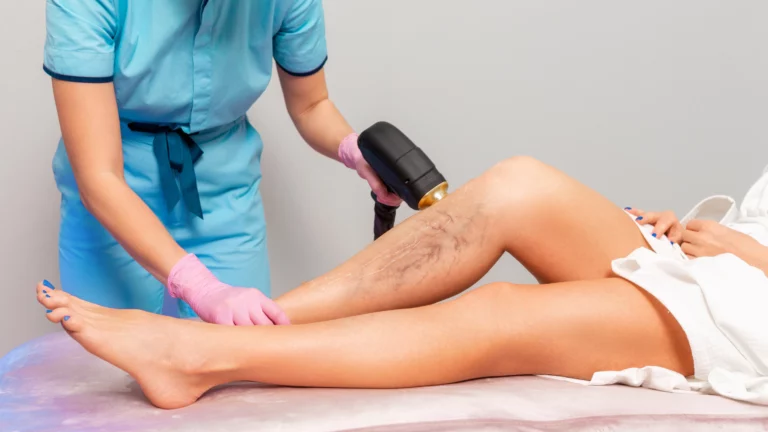
Lots of people over the age of 50 have bigger veins and tiny blood vessels on their legs that show through the skin. The large ones are called varicose veins; they’re like raised, swollen, twisted tubes that you can see on the legs. The small ones are called spider veins; they look like tiny red, purple, or blue lines on the skin, and they often appear on the legs and face. Varicose and spider veins are more common in women and can happen during or after pregnancy. They’re also more likely to show up in people who stand a lot, like teachers, hairdressers, or shop assistants.
The best treatment for leg veins, particularly broken or spider veins, often involves broken vein laser treatment, also known as laser vein therapy or laser vein removal. This minimally invasive procedure utilizes laser technology to precisely target and eliminate visible, broken blood vessels on the legs.
An alternative solution that we also offer is called sclerotherapy – an injectable solution.
The session time is around 30-45 minutes.
The number of sessions needed for vein laser treatment may vary based on factors like the size of the treatment area, the colour of the veins, and your skin type. We will arrange a consultation with one of our experienced specialists to discuss your treatment choices and recommend a personalised plan that suits your needs. We’ll also be happy to address any other queries you might have regarding laser treatment.
Vein laser treatment aftercare involves: