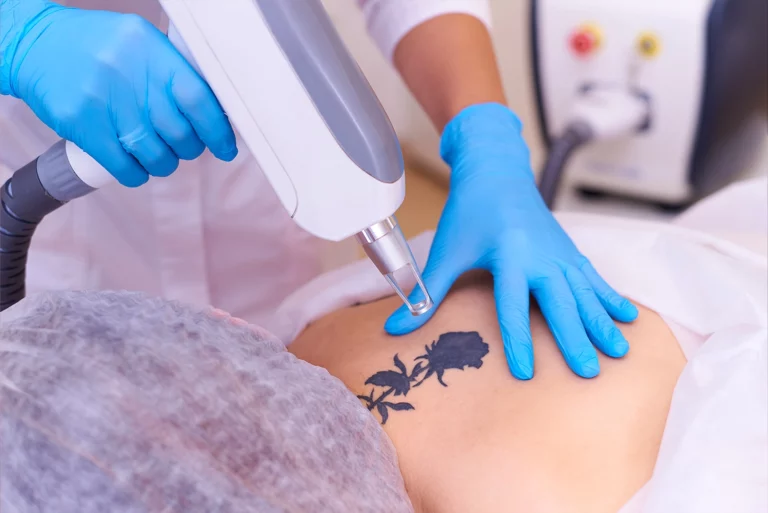
Laser tattoo removal is a non-invasive medical procedure that uses focused light energy to help reduce the appearance of unwanted tattoos. The laser works by targeting ink particles in the skin and breaking them into smaller fragments, which are gradually processed by the body’s immune system over time.
The degree of fading and number of sessions required can vary between individuals and depend on several factors, including tattoo size, ink colour, depth, and skin type. Darker pigments such as black or dark blue often respond more readily to treatment, while lighter colours may take longer or require additional sessions.
Some temporary skin reactions such as redness, swelling, mild blistering or scabbing may occur following treatment. Your practitioner will explain the potential risks, aftercare, and expected recovery process during your consultation.
Cosmetic skin treatments, including facials and device-based procedures, are non-medical services intended to support the appearance of the skin. Individual results may vary based on skin type, lifestyle factors, and treatment consistency.
All treatments require a consultation with a qualified practitioner to determine suitability and discuss
potential risks, side effects, and expected outcomes. These treatments are not intended to diagnose, treat, or prevent any medical conditions.
From $150 Per Session
Laser tattoo removal uses focused light energy to target ink particles in the skin and break them into smaller fragments. Over time, these fragments are gradually processed and removed by the body’s natural systems.
The results of treatment can vary depending on factors such as the size, colour, and depth of the tattoo, as well as individual skin characteristics and response to the laser. Multiple sessions may be needed for noticeable fading. A consultation with a registered practitioner is recommended to determine whether this treatment is suitable for you.
After a laser tattoo removal session, the treated area may appear red, swollen, or slightly tender. Some temporary changes such as mild blistering or scabbing may also occur. Over time, the appearance of the tattoo may gradually change as the body processes the fragmented ink particles.
Following your practitioner’s aftercare instructions is important. This may include keeping the area clean, protecting it from sun exposure, and using recommended creams or ointments to support healing and reduce the risk of complications. Individual responses to treatment vary, and the speed and degree of fading may differ between people.
Laser tattoo removal may reduce the visibility of a tattoo, but complete removal is not always guaranteed. The outcome can vary depending on factors such as the tattoo’s size, colour, ink type, location, and individual skin characteristics. Some tattoos may fade more noticeably than others, while others may leave behind residual pigment.
A consultation with a registered practitioner is recommended to discuss the likely outcome and what can reasonably be expected for your specific tattoo.
Some discomfort may be experienced during laser tattoo removal, but the level varies between individuals. Factors such as the tattoo’s location, size, and a person’s individual sensitivity can influence how it feels. Your practitioner can discuss strategies to manage any discomfort, and in some cases, a topical numbing agent may be recommended before treatment.
No before and after gallery found.