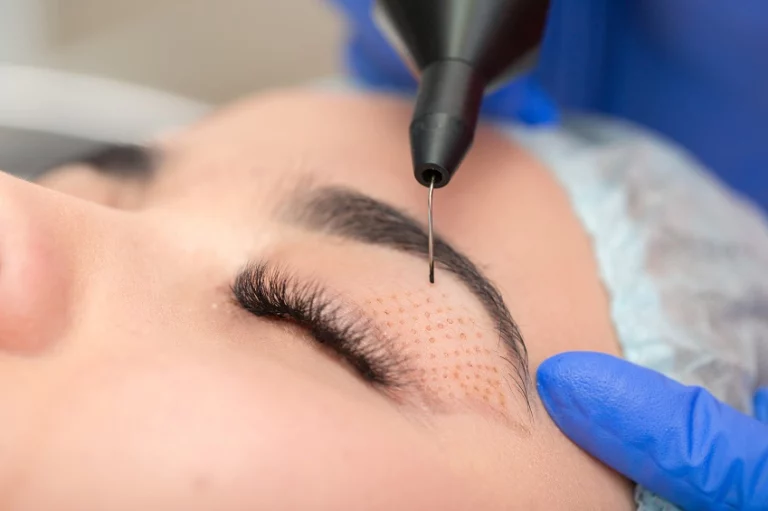
Plasma skin regeneration, sometimes referred to as Plasmage, is a non-surgical cosmetic procedure used for skin tightening and certain dermatological concerns. The procedure uses a device that generates plasma (an ionised gas) to deliver controlled energy to the skin. This energy produces a thermal effect that can be applied to address specific skin issues.
During the procedure, the device delivers plasma energy to the skin’s surface, creating small, controlled micro-injuries. This stimulates the skin’s natural healing response, which may support collagen production and changes in skin texture. Plasmage can be used to address concerns such as wrinkles, fine lines, mild sagging, acne scars, and some pigmentation issues.
As with all medical procedures, individual responses vary. A consultation with a qualified practitioner is required to assess suitability, discuss potential outcomes, and review any risks or aftercare instructions.
Cosmetic skin treatments, including facials and device-based procedures, are non-medical services intended to support the appearance of the skin. Individual results may vary based on skin type, lifestyle factors, and treatment consistency.
All treatments require a consultation with a qualified practitioner to determine suitability and discuss
potential risks, side effects, and expected outcomes. These treatments are not intended to diagnose, treat, or prevent any medical conditions.
From $750
This tiny superficial thermal trauma causes the skin in its vicinity to tighten and lift — giving results that are immediately noticeable after just one treatment. Over the next 3 months, the elasticity of the skin and the skin tightening effects will continue to progress as the healing of the dermis promotes the production of new collagen and elastin.
Plasmage treatments involve the controlled application of plasma energy to the skin, which may support improvements in skin texture and the appearance of fine lines and wrinkles. The treatment can be directed at specific areas, making it suitable for delicate regions such as around the eyelids. It may also be used to address concerns such as mild sagging, acne scars, or certain pigmentation issues.
The procedure is generally performed under local anesthesia or with topical numbing agents to help ensure comfort. Individual responses vary, and a consultation with a qualified practitioner is necessary to determine whether the treatment is appropriate and to discuss potential outcomes and risks.
Plasmage treatment is generally well tolerated. Topical numbing agents or local anesthesia are usually applied to help improve comfort during the procedure. Some individuals may experience mild sensations, often described as a brief tingling or a light tapping on the skin. Pain perception varies between individuals, and your practitioner will discuss ways to manage any discomfort during your consultation.
Plasmage is considered a minimally invasive procedure. After treatment, some individuals may experience temporary effects such as redness, swelling, or crusting at the treated area. Crusting can last from a few days up to a week, and full recovery may take approximately two weeks or longer, depending on individual healing responses. Experiences vary between individuals, and a consultation with a qualified practitioner is recommended to discuss potential side effects, suitability, and any precautions relevant to your situation.
The number of Plasmage treatments required varies depending on factors such as the type and severity of the skin concern, as well as individual responses to the procedure. Some individuals may see desired effects after a single treatment, while others may require additional sessions. A consultation with a qualified practitioner is necessary to assess your skin and develop a personalised treatment plan.
No before and after gallery found.